
Spelt flour - organic white
Options
Product Information
Spelt (dinkel, spelt, krupnik) is one of the oldest species of wheat, which is why it is also known as ancient wheat. Spelt grain is slightly larger than wheat grain. It is hard and tough, with each grain encased in a husk that protects it from pests and all kinds of disease. Thanks to organic cultivation, without synthetic fertilisers and pesticides, spelt is an increasingly sought-after grain.
100 years ago, spelt was a staple food in Germany, Austria and Switzerland, but due to lower yields in the 20th century, it fell victim to the production craze and was dethroned by wheat. Dr Gottfried Hertzka discovered Hildegard's medicine, and following excellent treatment results using spelt, its cultivation increased once again. Despite this, this knowledge is still not widely known in Croatia.
Spelt flour is used for making bread, pastries and products for children. It is excellent in combination with rye, wheat or other types of flour. Since spelt is an ancient species of wheat, there is virtually no difference in flavour between spelt flour and wheat flour. However, spelt flour is healthier and nutritionally richer. Besides flour, spelt can be used to produce semolina, bran and flakes, and hulled spelt grain can also be used. The beneficial effects of spelt can be enhanced by using it in sprouted form. Desserts, side dishes and even main meals can be prepared from this rich grain.
Benefits of spelt:
- warms the body (promotes circulation)
- easily digested
- provides a feeling of fullness
- rich in essential fatty acids and minerals
- promotes muscle growth
- improves blood count
- lowers cholesterol levels
- boosts concentration
- contributes to the formation of blood cells
- normalises blood sugar
- improves mood
Directions for use:
In cooking and baking, white spelt flour successfully replaces any other flour completely, or can be mixed in a 1:1 ratio with the flour in the original recipe.
The flour is also used in cooking (e.g. for thickening), but very high cooking temperatures should be avoided.
Due to its lower gluten content, the dough should not be kneaded too much, as it will otherwise result in a crumbly texture; compared to wheat flour, it has higher water solubility, so a smaller amount of liquid is required when making dough.
Some sources recommend reducing the amount of liquid from the original recipe by 25%. Also, doughs made from white spelt flour will not rise as much as those made from wheat flour, but as a rule they are much easier to roll out, making this flour ideal for making strudels and similar delicacies.
Ingredients:
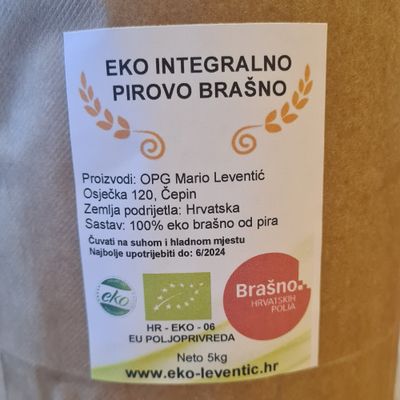
100% white spelt flour (lat.Triticum spelta)
Note:
This product contains gluten.
Storage conditions:
Store in a dry, cool and dark place.
Best before:
Indicated on the packaging.
Additional Product Info
Certificates

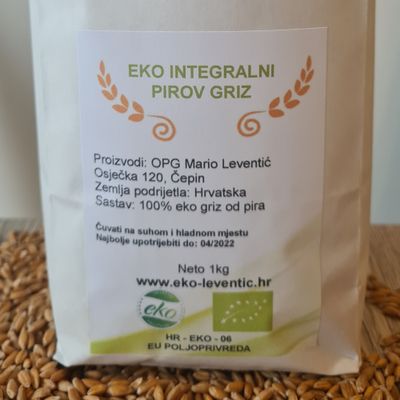
OPG Mario Leventić
Čepin, HR
The Mario Leventić family farm, based in Čepin, deals exclusively in organic production. They grow fodder and arable crops.
Product Ratings
Questions & Answers
Sign in to ask questions
No questions yet. Be the first to ask one.
Similar Products
More from OPG Mario Leventić




We also specialise in technology built specifically for short supply chains. Get in touch if that is something you need!
Shopping Cart (0)
Your cart is empty