
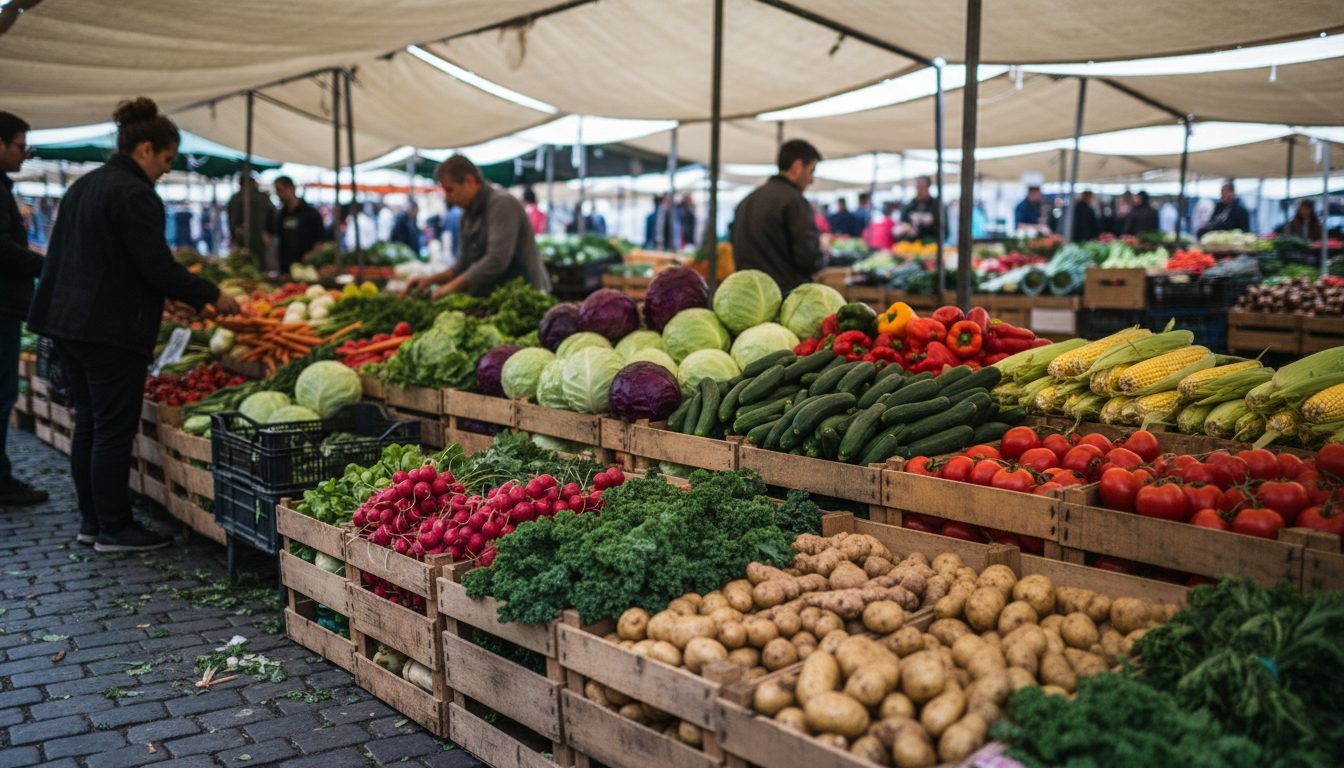
Why Eat Seasonally: What a Year of Tracking Prices and Complaints Taught Us About 12 Foods
Ivan Lauc šest godina vodi Plodovi.hr. Inženjer robotike po struci, u kratke lance opskrbe hranom ušao je bez poljoprivrednog zaleđa i naučio ih iznutra - surađujući s više od 250 hrvatskih proizvođača, od malih OPG-ova do voćnjaka i pčelara. To ga je naučilo koliko sitnica odlučuje hoće li mali proizvođač preživjeti sezonu: kada se bere, koliko se stigne isporučiti u jednom danu i zašto cijena koju kupac vidi rijetko dođe do onoga tko je hranu uzgojio.
Why Eat Seasonally: The Short Answer from Our Records
Eating seasonally pays off because during peak season, prices, transport distances, and the time between harvest and your kitchen drop all at once. In our weekly delivery records, we see the biggest differences in soft fruit and leafy greens, whereas for potatoes, onions, and carrots, the difference throughout the year is almost negligible.
What articles on this topic often lack is actual data. Stating that seasonal food is healthier is true, but it doesn't help much when you're standing in front of a shelf making a decision. We were interested in something more practical: which items truly hurt your wallet and compromise quality when bought out of season, and which ones you can comfortably buy year-round without a second thought.
That's why over the course of a year, we tracked three metrics across twelve items most common in our weekly deliveries: price movements per kilogram, how many days after delivery an item remains usable, and which items generated the most customer complaints. The conclusions below apply to our short supply chain and our OPGs (family farms), but the underlying logic applies anywhere.
The 12 Produce Items We Tracked and How We Did It
We tracked twelve items that appear in almost every weekly basket, divided into three categories: delicate soft fruit and leafy greens, fruiting vegetables with a distinct summer season, and storable produce that lasts for months. This division matters because each group behaves quite differently over the course of the year.
For each item, we recorded our weekly price per kilogram, the comparative price of the same item in a supermarket that same week, and the declared origin. In addition, we logged weekly customer complaints, as complaints are the most honest indicator of quality: customers get in touch when something isn't right, regardless of what the label says.
- Delicate group: strawberries, Swiss chard, lettuce, spinach
- Fruiting vegetables and fruits: tomatoes, bell peppers, cucumbers, zucchini
- Storable group: potatoes, onions, carrots, apples
- What we tracked: weekly price per kg on our platform vs. in supermarkets, origin, days of usability post-delivery, and number of complaints
Where the Price Difference Is Greatest, and Where It Hardly Exists
We observed the largest year-round price swings with strawberries, tomatoes, and bell peppers. During peak local season, prices for these items drop to levels out-of-season produce can never match, as off-season buying means paying for heated greenhouses or transport from warmer climate zones. For potatoes, onions, and carrots, the price variation throughout the year is smallest.
The logic is straightforward. When something ripens in a field in your county, the only costs are harvesting, packing, and short-distance transport. When it's off-season, someone had to heat a greenhouse, pick the crop unripe so it survives transit, or haul it thousands of kilometers in refrigerated trucks. All of this winds up reflected in the price—and part of it in the flavor.
Storable produce behaves differently because it's naturally suited for storage. Autumn-harvested potatoes, onions, and carrots keep comfortably until spring, making the period when true out-of-season produce exists quite short. Price differences here are minimal, and quality issues only arise toward the end of the storage period, when potatoes start sprouting and carrots lose their firmness. Apples follow a similar pattern, with one catch: apples kept in controlled-atmosphere storage may look flawless in March, but their texture and aroma are not the same as in October.
How Much Longer Seasonal Produce Stays Fresh After Delivery
The main factor in shelf life isn't the item itself, but the time elapsed since harvest. Produce from a short supply chain arrives picked just a day or two before delivery, so its freshness countdown starts at nearly full capacity in your kitchen. Imported goods have often spent most of their shelf life in transit and distribution.
This is most apparent with leafy greens. Swiss chard, spinach, and lettuce lose turgor—or firmness—within days of picking. If harvested in the morning and delivered the next day, they can remain fresh in your fridge for a full week. If they spent several days moving through a supply chain before reaching you, they might look crisp at first glance, but will wilt much faster. The same principle applies to strawberries, where the difference is measured in hours rather than days.
For fruiting vegetables, the shelf-life gap is smaller, but it reveals itself differently. A tomato picked green and ripened during transport will last a long time, but it will never develop the flavor of a vine-ripened field tomato. For tomatoes, buying seasonally is less about longevity and more about taste and aroma. For storable items, there is virtually no difference in shelf life, as both local and imported potatoes keep for weeks under proper conditions.
What Complaints and Demand Drops Tell Us When Something Arrives Too Early
Complaints aren't spread evenly throughout the year; they cluster around the shoulder periods of a season. We receive the most complaints about soft fruit and leafy greens during the weeks when a season is just starting or drawing to a close, as the produce is often uneven, smaller, and more sensitive than during peak harvest.
The same holds true for demand. When we offer something too early, before it reaches its true peak, interest is noticeably lower than two or three weeks later. Customers who regularly order through short supply chains quickly learn to recognize when produce is at its best and are willing to wait. This was a valuable lesson for us: it's better to wait a week than to put something in the basket that will disappoint.
The take-away isn't that everything out of season is bad, but that a clear hierarchy exists. For strawberries, tomatoes, bell peppers, and leafy greens, seasonality is decisive for both price and quality. For potatoes, onions, carrots, and apples, storage conditions matter far more than whether they are technically in season. Knowing this distinction saves both money and frustration.
How to Apply This to Your Own Shopping
A practical rule of thumb from our data: strictly follow seasonality for delicate items, and focus on storage conditions and origin for storable ones. Furthermore, plan purchases during peak season weeks to freeze or preserve the surplus, as this is when the lowest prices and best quality coincide.
In practice, this means buying strawberries in May and June and freezing a portion, purchasing tomatoes and bell peppers in August and September when they are cheapest and ripest, enjoying Swiss chard and spinach throughout spring and autumn, and stocking up on potatoes, onions, and carrots in autumn if you have a cool, dark place to store them. Savings don't come from a single smart purchase, but from consistently avoiding items during the months when they are most expensive and of lowest quality.
If you want to check what is currently at peak season, the easiest starting point is a seasonal fruit and vegetable calendar and our weekly changing offering. Our inventory changes as the fields change, making our list of available produce a reliable indicator of what is worth adding to your basket right now.
Key Takeaways
- The largest year-round price and quality differences occur with strawberries, tomatoes, bell peppers, and leafy greens.
- For potatoes, onions, carrots, and apples, the difference is small, making storage conditions more important than whether it's technically in season.
- Freshness depends less on the produce type itself than on the time elapsed from harvest to kitchen—which is shortest with short supply chains.
- Complaints and lower demand peak at the edges of the season, when produce has not yet reached its peak.
- The most cost-effective approach is buying during peak season weeks and freezing or preserving the extra.
If you want to check what's at its peak this month, take a look at our Seasonal Fruit and Vegetable Calendar, which we update regularly based on conditions in the field.
Frequently Asked Questions
Is seasonal fruit and vegetable produce really more nutritious than out-of-season produce?
For delicate items like leafy greens and soft fruit, some vitamins—especially vitamin C—degrade over time after harvest and during transit, so recently picked produce generally arrives in better condition. For storable items like potatoes or onions, the difference is much smaller since they are adapted for long storage. However, the most noticeable practical difference is in flavor and texture, which customers spot immediately.
How can you tell that a tomato or strawberry isn't in season?
The clearest indicators are aroma and texture. A ripe, seasonal tomato has a strong fragrance near the stem and yields gently to touch, whereas fruit picked green and ripened during transit looks pristine but has almost no aroma. With strawberries, check if the inside is pale white and hollow, a sign it was harvested unripe to withstand transport.
Is it worth buying in bulk during peak season and freezing?
Yes, and it represents the single biggest saving for a household. Peak season offers the lowest prices and highest quality, so freezing strawberries, asparagus, or Swiss chard gives you produce that in winter is both better and cheaper than imported fresh options. The key is preparing them properly before freezing, such as washing and drying fruit and blanching vegetables.
Why does the price of the same vegetable fluctuate week to week in a short supply chain?
Because prices reflect actual field conditions rather than planned retail promotions. Weather, yield, harvest labor availability, and season length vary from week to week, so prices drop when crops are abundant and rise at the start and end of the season. Supermarket prices appear more stable because they are smoothed out through imports and large volumes.
Does seasonal automatically mean cheaper?
Not always. For strawberries, tomatoes, bell peppers, and leafy greens, peak season almost always means lower prices. For storable items, the price difference is small, and for certain niche, low-yield items, local seasonal produce can be more expensive than imported options—though with noticeably superior quality and a much shorter journey from farm to customer.