
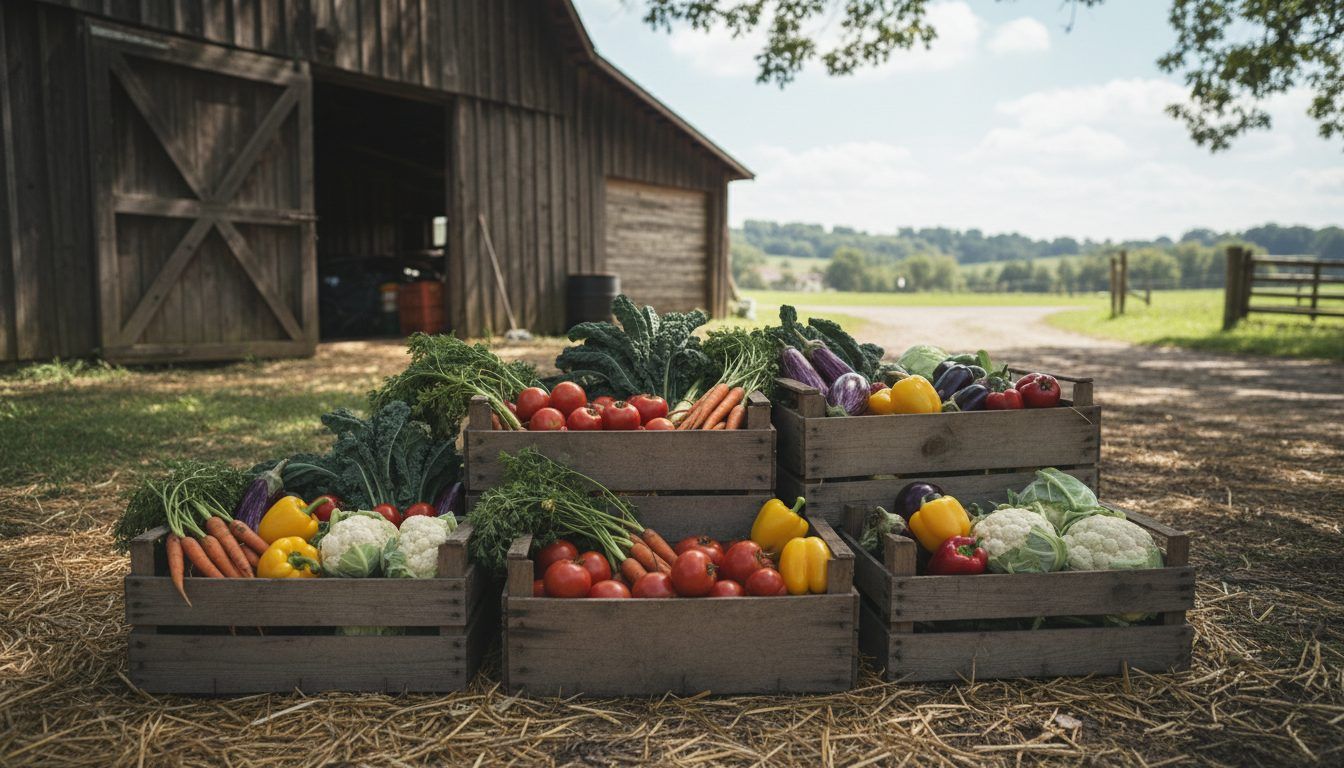
Weekly Seasonal Produce Calendar: What 52 Weeks of Deliveries Taught Us About True Season Length
Ivan Lauc šest godina vodi Plodovi.hr. Inženjer robotike po struci, u kratke lance opskrbe hranom ušao je bez poljoprivrednog zaleđa i naučio ih iznutra - surađujući s više od 250 hrvatskih proizvođača, od malih OPG-ova do voćnjaka i pčelara. To ga je naučilo koliko sitnica odlučuje hoće li mali proizvođač preživjeti sezonu: kada se bere, koliko se stigne isporučiti u jednom danu i zašto cijena koju kupac vidi rijetko dođe do onoga tko je hranu uzgojio.
Why a Weekly Calendar Instead of a Monthly One
Monthly seasonal produce calendars are too broad. Most local produce has a window shorter than a full month, so a label like “asparagus: April and May” suggests eight weeks of availability when, realistically, there are only five or six. A week is the only time unit that matches the actual rhythm of harvesting and ordering.
Our webshop operates on weekly cycles: by a specific day, an OPG lets us know what they will harvest, we list it, and for that week, the produce either exists or it doesn’t. When you stack these records across the year, you get something a monthly chart simply cannot show: the exact week an item first appeared, the week it disappeared, and how many weeks it was continuously available, rather than just sporadic.
The difference is practical. If you are planning to freeze, preserve, or make a larger order for winter stores, you don't need to know that “June is apricot season,” but rather that you have roughly three weeks when it actually makes sense to do it. A monthly calendar lulls you into inaction, while a weekly one gets you moving.
Where the Actual Harvest Differs Most from "Official" Calendars
We see the biggest discrepancies between generic calendars and what actually comes from the fields with asparagus, tomatoes, strawberries, and watermelon. In all these cases, published calendars list a longer window than our OPGs actually have, because they combine greenhouses, imports, and different climate zones into a single row of a chart.
Asparagus is the best example. Calendars list April and May, but in practice, it’s a few intense weeks: wild asparagus from Dalmacija starts first, continental cultivated asparagus later, and each harvest lasts much shorter than people expect. That is why it’s common for someone in the second half of May to ask where the asparagus is, and the answer is simple: the harvest is over, and the plant is left to regenerate.
Tomatoes go in the opposite direction. They are in stores all summer, but from our continental fields, they arrive significantly later than calendars suggest—only once nighttime temperatures stabilize and the fruit truly ripens outdoors. Tomatoes from Dalmacija arrive earlier. The same logic applies to strawberries: the first wave is short and intense, and what is sold weeks later is usually no longer from the same field.
- Asparagus: a short, intense window of a few weeks, not two full months
- Field-grown tomatoes: continental tomatoes trail behind those from Dalmacija and behind standard calendars
- Strawberries: the first wave is the shortest and highest quality; later supplies often come from a different origin
- Watermelon and cantaloupe: the window is narrower than it seems because grocery store supplies continue via imports
- Pumpkins and zucchini: a long window, but with a noticeable drop in quality toward the end of the season
The Continental and Dalmatian Seasons Are Not the Same
Croatia has two distinctly different seasonal curves, yet generic calendars combine them into one. The Dalmatian season starts earlier in spring and lasts longer into autumn, while the continental season starts later, but delivers a stronger, more abundant summer and a much richer autumn harvest. Our OPGs come from both regions, so this difference is visible every week.
In spring, this means the first greens on offer almost always come from the south: wild asparagus, spring onions, Swiss chard, early lettuce. In that same week, continental OPGs are still delivering winter store leftovers or early sprouts. The gap can be several weeks, depending on the year.
In autumn, the dynamic reverses. The continental region leads with apples, pears, plums, squashes, cabbage, kale, and root vegetables, while Dalmacija holds onto its late tomatoes, figs, and olives. That is why throughout October our catalog can feature produce that traditional calendars place in completely different months.
Produce with Two Seasons and Items That Appear for Only a Couple of Weeks
Some vegetables have two distinct seasons per year, while certain fruits appear in the selection for just two or three weeks. These are two categories that monthly calendars display worst, as both simply get lost in a single-row chart.
Lettuce, spinach, radishes, spring onions, and broccoli regularly have a double season. They start in early spring, disappear during the hottest weeks when summer heat destroys their quality, and return in September and October from a second planting. The autumn wave is often better: fewer side shoots, firmer leaves, and a longer shelf life in the fridge. If you looked for local spinach in August and couldn't find it, that wasn't a shortage, but a pause between two cycles.
On the other hand are items with a very narrow window. Wild asparagus, early berries, early cherries, apricots, figs, and certain pear varieties may be available for only two or three weeks. With them, there is no “I'll order next time,” because next time won't be for another year. That is why these items are frozen most often.
- Two seasons per year: lettuce, spinach, radishes, spring onions, broccoli, sometimes kale
- Overlapping through winter: kale, Swiss chard, leeks, kohlrabi, and late-harvest cabbage
- Narrow window of 2 to 3 weeks: wild asparagus, apricots, early cherries, figs
- Longest windows: potatoes, carrots, onions, apples, and cabbage, thanks to storage
- The winter gap isn't empty: root vegetables and leafy greens cover January and February
How to Use This Calendar to Plan Your Shopping
A weekly calendar is most valuable when used proactively rather than retrospectively. A practical rule of thumb: buy produce with a narrow window right away in its first or second week and preserve it for winter, while leaving items with a long window for later, as they won't disappear overnight.
The first week of the season is rarely the cheapest, but it is often the highest quality as it comes from the initial field harvest. Mid-season usually offers the best value for money, while the final weeks can bring smaller or less uniform produce. For fruit intended for freezing or preserving, mid-season is almost always the sweet spot.
The second rule concerns shelf life. When produce has two seasons, the autumn harvest generally keeps longer in the fridge than the spring one, making it a better choice for buying in bulk. And as winter approaches, rely on items that overlap: kale, Swiss chard, leeks, and root vegetables cover the months when people typically think there is no local produce available.
- Narrow window (2 to 3 weeks): buy immediately, plan to freeze or preserve
- Mid-season: best value for money, ideal for winter preserves
- End of season: smaller and less uniform produce, great for jams and soups
- Autumn wave of leafy greens: longer shelf life than spring crops
- Winter: kale, Swiss chard, leeks, carrots, beets, and cabbage bridge the gap through January and February
Key Takeaways
- Most local produce has a season shorter than a single month, so monthly calendars systematically overestimate how long an item is truly available.
- Asparagus, strawberries, and apricots have the narrowest window, while field-grown tomatoes from continental regions arrive noticeably later than standard charts state.
- The Dalmatian season starts earlier in spring and lasts longer into autumn, while continental regions offer a stronger summer and autumn harvest.
- Lettuce, spinach, radishes, spring onions, and broccoli have two seasons per year, with the autumn harvest generally storing better.
- Buy short-window items immediately and process them, while leaving long-window produce for later in the season.
We broke down just how much buying seasonally pays off in terms of money and freshness in our price and shelf-life analysis of 12 produce items, also based on our own weekly delivery tracking.
Frequently Asked Questions
When does the asparagus season actually start in Croatia?
Wild asparagus in Dalmacija starts first, usually as early as March, while continental cultivated asparagus arrives later, throughout April. In both cases, the harvest lasts shorter than suggested by calendars listing April and May, as the plant is left to regenerate for the following year after a few weeks of intensive harvesting. If you want to freeze asparagus, it is best to do so during the first two weeks of harvesting.
Why are local tomatoes unavailable in June when stores have them?
Field-grown tomatoes need stable, warm nights and enough sunny days to ripen, which in continental Croatia means the first true harvests don't arrive until midsummer. What is sold in stores earlier is usually greenhouse or imported tomatoes. Tomatoes from Dalmacija arrive a bit earlier than continental ones, but even they don't cover all of June.
Which local vegetables are in season during winter?
Winter offerings include kale, Swiss chard, leeks, cabbage, kohlrabi, and root vegetables such as carrots, beets, parsnips, root parsley, and Jerusalem artichokes, along with stored potatoes and onions. Kale and Swiss chard often overlap through January and February, making it easy to cover your entire winter menu. Winter is not a dead season; it simply offers less variety than summer.
Is it better to buy in bulk at the beginning or the end of the season?
For preserving and freezing, mid-season is the most cost-effective time, as supply is at its peak, prices are most stable, and produce is consistent. The beginning of the season brings the highest quality, but usually at a higher price, while the final weeks can yield smaller and less uniform produce that remains excellent for jams, soups, and sauces.
How can you tell if something is truly local and seasonal, rather than imported?
The most reliable indicator is the harvest calendar: if an item is offered outside the known window for local harvesting, it is almost certainly imported or from long-term storage. Other indicators include irregular fruit size and shape, shorter shelf life, and information about the grower. In a short supply chain, you can even check the specific name of the OPG that harvested the item.