
Vitamin A

Why is vitamin A essential for our health and
which foods contain the most of it?
Vitamin A is the name for a group of fat-soluble retinoids, including retinol, retinal, and retinyl esters. It plays numerous important roles in the body: immune function, preserving eye health, reproductive function, and supporting cell development. Vitamin A is crucial for vision as an essential component of rhodopsin, a protein that absorbs light in retinal receptors, and because it supports the normal differentiation and functioning of conjunctival membranes and the cornea. Vitamin A also supports cell growth and differentiation, playing a critical role in the normal formation and maintenance of the heart, lungs, kidneys, and other organs. Vitamin A deficiency weakens the immune system, making us susceptible to various infections.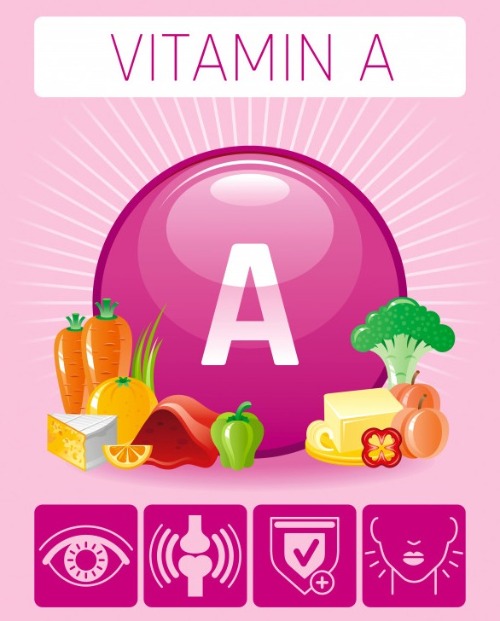
Two forms of vitamin A are available in the human diet: preformed vitamin A (retinol and its esterified form, retinyl ester) and provitamin A carotenoids. Preformed vitamin A is found in foods of animal origin. By far the most important provitamin A carotenoid is beta-carotene; other provitamin A carotenoids are alpha-carotene and beta-cryptoxanthin. The body converts these plant pigments into vitamin A. Both provitamin A and preformed vitamin A must be metabolised intracellularly into retinal and retinoic acid, the active forms of vitamin A, in order to support the vitamin's important biological functions.
Foods rich in vitamin A:
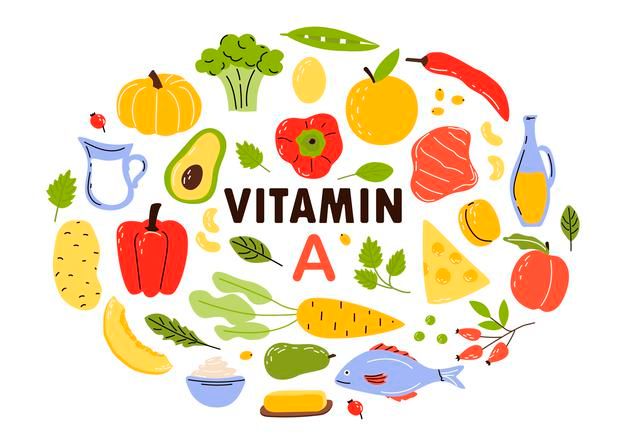
- milk and dairy products (cheeses and butter) 🥛🧀
- eggs 🥚
- dark green leafy vegetables (spinach, Swiss chard, kale) 🥬
- fruit and vegetables of yellow/orange colour (pumpkin, carrots, sweet potatoes, cantaloupe, apricots, peaches) 🥕🍑
- tomatoes 🍅
- liver (beef, lamb, goose)
- oily fish (tuna, salmon, mackerel, trout) and fish oil 🐟🐠
- fortified foods (dairy products, margarine spreads, cereals).