

Vitamin D

Why vitamin D is essential for our health and
which foods contain the most of it?
Vitamin D, or calciferol, is a fat-soluble vitamin, meaning it is best absorbed when taken with foods containing fats or through mucous membranes. One of the primary roles of vitamin D in the body is promoting the utilization of calcium and phosphate ions from food and their use in maintaining musculoskeletal health. Although this role of vitamin D was the first to be thoroughly described, it has also proven effective in preventing respiratory infections, increasing the body's resistance to tuberculosis and various bacterial infections, and maintaining the function and balance of gastrointestinal health.
There is growing evidence linking lower vitamin D levels to an increased risk of developing multiple sclerosis (MS) and a worse clinical picture. In patients with vitamin D deficiency (which affects as much as 40–50% of the world's population), larger areas of demyelination in the brain have been observed. Vitamin D, which is synthesized in our body under the influence of sunlight, has also proven effective in treating psoriasis.
Vitamin D deficiency increases the activity of the renin-angiotensin system. The groups at highest risk for severe novel coronavirus disease COVID-19 overlap with those at greatest risk of severe vitamin D deficiency. This includes older adults, men, individuals who avoid sun exposure for cultural or medical reasons, Black individuals, those living at northern latitudes, people with obesity, and those suffering from chronic lung diseases, hypertension, cardiovascular disease, or diabetes.
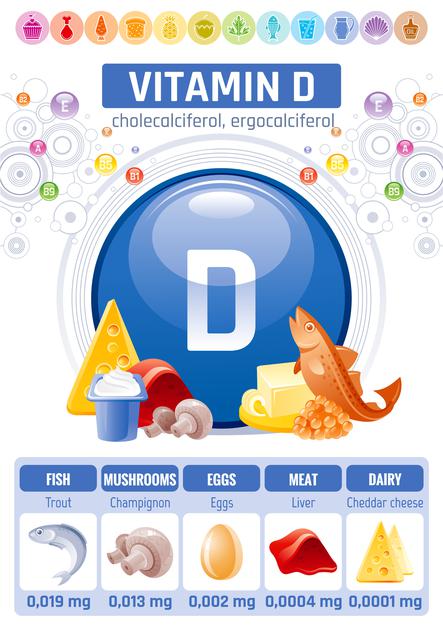
Foods rich in vitamin D:
- salmon, cod, swordfish, tuna, pilchards, mackerel, anchovies, sardines🐟
- crabs🦀, seafood
- dairy products 🧀🥛
- eggs 🥚
- mushrooms 🍄
- organ meats